Before Capital Flows.
The conclusions.
Closed-door conclusions from eight of Europe's most urgent investment and systems conversations. Where the room landed, the commitments made, and what carries into Edition II. No names. Just the record.
this document
This is a shareable insights piece connecting the highlights and outcomes from the closed-door sessions of our inaugural event, Momentum Summit 2026, on the 8th of May 2026.
It does not state the names of contributors other than the hosts who led each session. Anyone who contributed is welcome to share and add to these points. This is a starting point. It is the basis for where we landed on 8 May, which will be recorded and published, and picked back up at the next edition. If you feel you could contribute to a particular commitment or action, reach out so we can help you engage with the community directly.
Edition II follows in Zürich. Momentum Summit 2026 was Edition I of The Decision Room.
Systemic Capital: Unlocking Investment for Nature and Climate
 DR/2026/008 · Wyss roundtable · Plate 01a
 DR/2026/008 · Wyss roundtable · Plate 01b
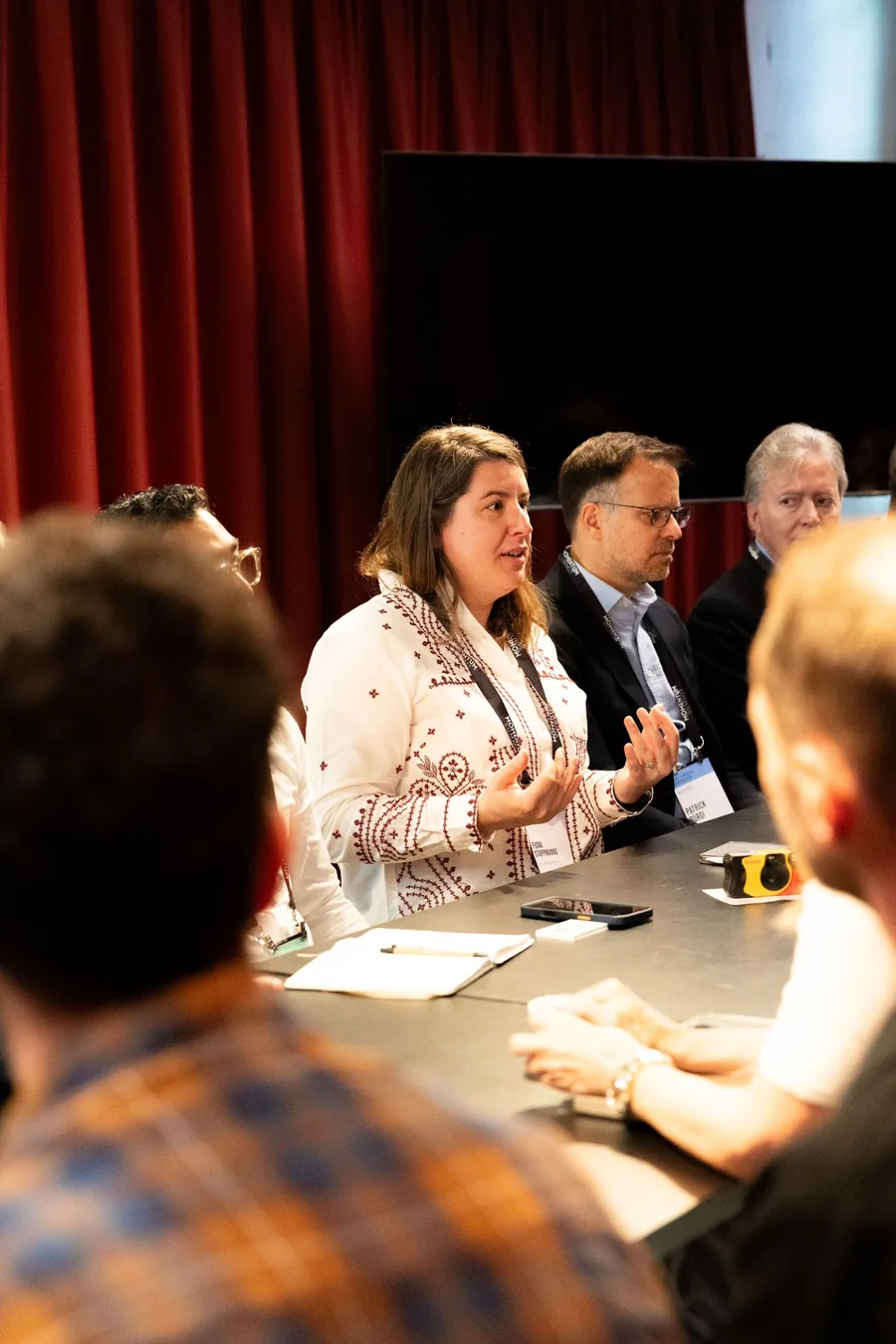
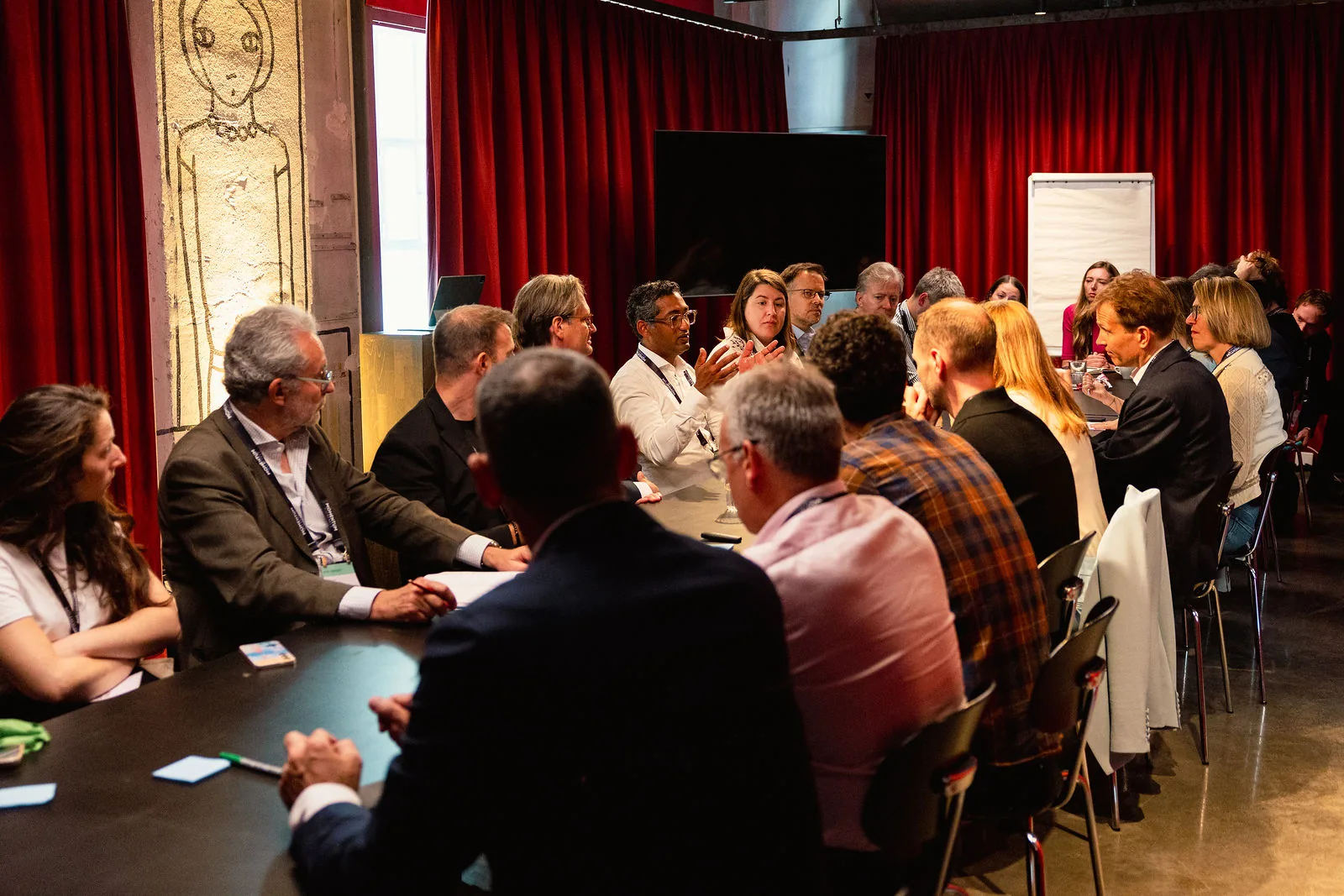
This session set out to do something precise: move beyond the general principle that capital should flow to nature, and examine what it actually takes to structure investments in interconnected natural systems.
The discussion was grounded in a live case, the Amazon Nut value chain in Peru, where the Wyss Academy and Amazonia Impact Ventures have invested across producers, processors, off-takers and communities to create a traceable, financially sustainable system. The room then widened the question: what does it take for capital to engage with complex, early-stage systems where risks, returns and impact are not yet aligned, and what structural, financial and relational innovations might unlock that engagement.
- Investing in the whole system, not just the project.The Amazon Nut case demonstrated a logic that runs counter to conventional portfolio theory: rather than diversifying across uncorrelated assets, the fund invested intentionally across multiple nodes of the same value chain. The rationale is that each investment de-risks the others. When communities have income from Brazil nut harvesting, they protect their land. When processors have access to capital with traceability requirements tied to their interest rate, they pay farmers more. When off-takers can verify provenance to the level of individual concession, they pay a premium. The "concentration" is a feature, not a bug.
- The timeline mismatch is the root cause of most capital failures in nature.One participant named the core structural problem clearly: institutional investors operate on timelines of quarters to a few years. Nature iterates on timelines of decades. The moment you stretch the investment timeline to match the ecology, the expected returns come back. The conversation returned repeatedly to the need for "patient capital" that understands duration as a feature of the asset class, not a risk to be managed away.
- The 2/20 model is incompatible with the economics of impact in the Global South.Several participants challenged the standard fund management fee structure as a structural obstacle. When a fund manager's income scales with fund size regardless of impact delivered, the incentive is to raise larger funds and deploy capital toward structures that work at scale, which systematically excludes the small, community-level projects that create the most durable change. Some funds in the room are experimenting with impact KPIs tied to carry as an alternative. The point was made that the same logic applies to development finance institutions: money pledged for nature routinely ends up in large financial institutions that can absorb it, not in the communities that need it. Less than 0.02% of pledged capital actually reaches on-the-ground projects in the Global South.
- Philanthropy has to rethink its role.Foundations remain largely in grant-giving mode, comfortable with money "going somewhere" without knowing whether it creates durable change. The session argued that philanthropic capital is urgently needed in the first-loss position of blended finance structures, particularly as government agencies step back from that role. BMZ (Germany's development agency), previously one of the main providers of first-loss capital in nature and climate funds, is redirecting priorities to defense and Ukraine. Philanthropy and family offices are the most natural replacements, but only if they reframe their capital as investable rather than expendable.
- Trust is the missing infrastructure, not just data.A recurring theme was the gap between the technical apparatus of nature markets (MRV, registries, standards) and the trust infrastructure needed to actually deploy capital. One participant described it as building integrity not just through measurement but through relationships, long-term, multi-year commitments between people who know each other. The example of an indigenous community in Mexico that spent five years building their own carbon project, developed their own methodology, and returned 92% of proceeds directly to the community was cited as a model, not a charity case.
- Wyss Academy and Amazonia Impact Ventures will propose a format for continued collaboration among those interested in engaging with this type of investment logic.
- The group committed to exploring what a logical capital stack looks like for nature-positive investments in high-risk contexts : identifying which actors can provide philanthropic first-loss, which family offices and VCs can take the mezzanine position, and which institutional actors can follow once risk is de-risked, and mapping this for at least one specific investment opportunity.
- Participants will examine the regulatory and tax frameworks in their respective jurisdictions (beginning with Switzerland) that currently prevent foundations from using philanthropic capital in profit-generating investment vehicles, with the aim of identifying at least one advocacy action that could unlock more flexible use of endowment capital.
The Next Food System: Ingredients, Fermentation and Industrial Scale
 DR/2026/008 · Food ingredients · Plate 02a
 DR/2026/008 · Food ingredients · Plate 02b
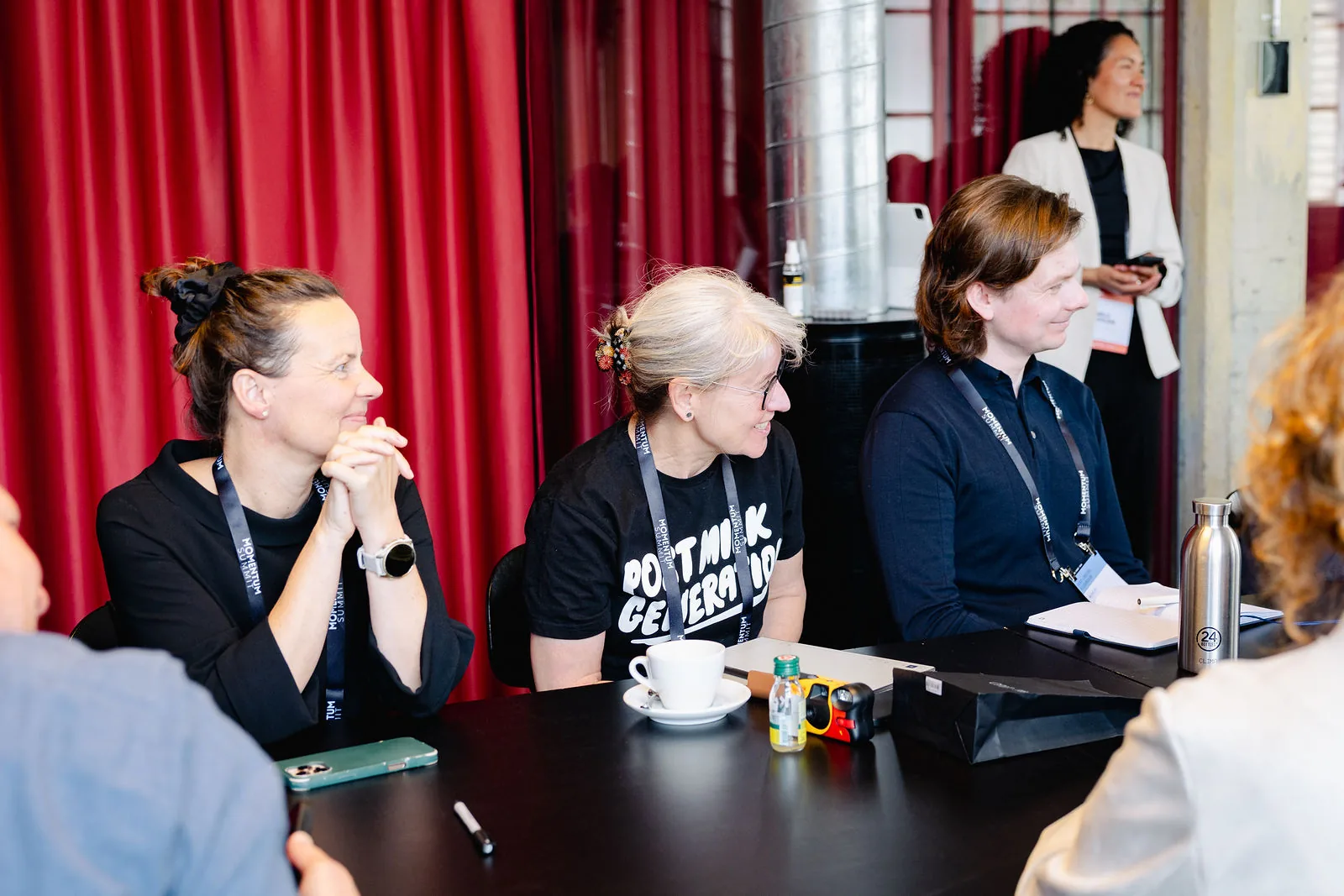
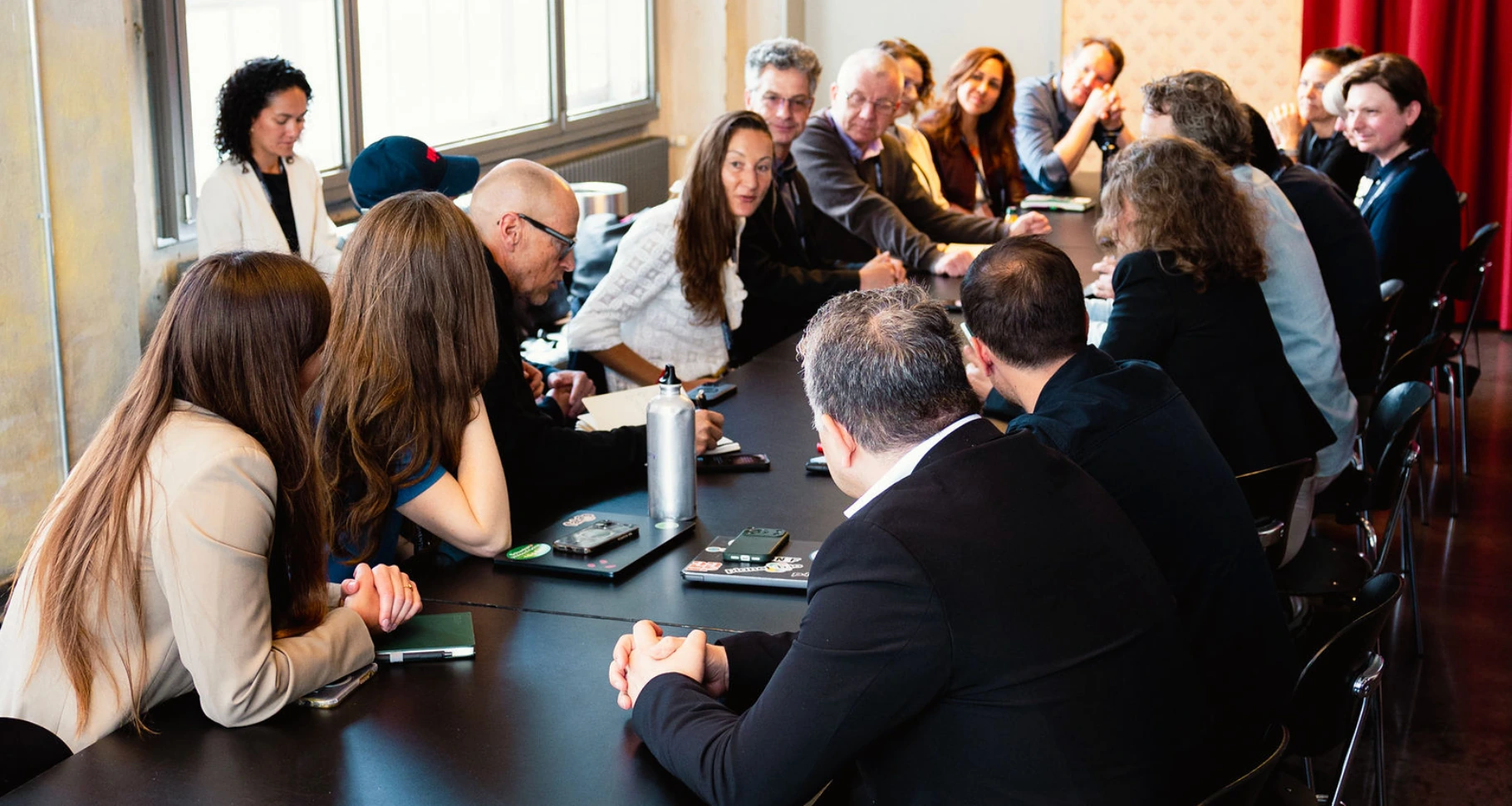
This session opened with an honest reckoning: science is not the obstacle. The economics are. Fermentation-derived ingredients and novel food inputs remain too expensive to displace incumbent systems at scale, and cost curves are moving more slowly than early investment assumptions implied. The conversation was grounded in operational reality, bringing together ingredient innovators, fermentation founders, food manufacturers, and investors to examine where the economics already work, what can be learned from sectors that have cracked analogous problems, and where the most productive interventions actually lie.
The tone was frank and solution-oriented, with particular emphasis on feedstock strategy, the challenge of scaling without losing margin, and the long arc required to build trusted commercial relationships with large food corporates.
- The feedstock is the business model.For most fermentation companies, feedstock makes up the core of COGS – and the assumptions built into early business models are frequently the thing that makes or breaks commercial viability. The companies gaining ground are those who mapped their cost structure from input to end market early, understanding not just what they can produce but whether the economics of producing it are compatible with what buyers will actually pay. One example cited in the session: a Scottish microalgae company that built its production model around the nutrient-rich liquid co-products of Scotch whisky distillation – pot ale and spent lees that distilleries would otherwise need to dispose of. The distillery had a waste stream problem. The company had a feedstock requirement. That match didn't just reduce input costs – it structurally changed the cost base, replacing a purchased input with one the industrial system was actively looking to offload. The broader lesson: the fermentation companies most likely to scale are those that start from end market economics – what a buyer in aquafeed or pet food will actually pay, benchmarked against the incumbent they are replacing – and work backwards through the cost structure to find inputs that make that price point achievable. The cheap feedstock is not the idea; it is the answer to a financial constraint that was defined first.
- The "boring business model" may be the most strategic one.Several founders and investors noted that the instinct to focus entirely on a novel ingredient – a new ingredient, a new format, a new consumer behaviour – often underestimates how slow and expensive category creation is. The companies finding commercial traction earliest are those offering drop-in solutions: products that replace something a customer already buys, perform at least as well, cost the same or less, and happen to come from a better source. No behaviour change required, no category education, no new purchasing habit to build. One participant put it directly: having an established product with known demand and a legible price benchmark as a revenue stream early on gives you the foundation – you know what you're selling, you know who buys it, and you know what they'll pay. The revenue floor buys you the runway and the credibility to prove the premium case. Nail it before you scale it: before committing to scale, you need a credible answer to taste, functionality and price – not a plan to solve them once you're bigger.
- Oatly's journey is a reference point for the field.The session included a detailed account of Oatly's arc, from a niche product for lactose-intolerant consumers to a mainstream brand. The pivotal transformation came when the company stopped marketing the product as a category solution and repositioned it as the norm. Crucially, the breakthrough distribution came not through traditional retail mechanics but through baristas, an unexpected constituency who became active advocates and co-developers. The lesson drawn: find the unconventional stakeholder who has a real reason to care, and build with them before trying to scale through conventional channels. Shared values are not a substitute for shared commercial interest. The same logic applies to early market selection more broadly: find the constituency where the need is functional and the demand is already there, before attempting to change behaviour at scale.
- The technology risk is resolved. The asset financing isn't.The room identified a structural funding gap that affects nearly every company in this space. Proof of concept at lab or small scale is fundable. An offtake agreement with a Nestlé or Cargill is a fundable event. But the infrastructure required to bridge those two points – the capex to build capacity before volume is confirmed – has no natural owner. Equity dilutes too far, and institutional debt requires certainty that doesn't yet exist. The gap is perennial and not unique to food: participants noted it mirrors the conversation in biofuels and energy, where the unlock came not from better technology but from project finance and long-term offtake agreements that brought in a different class of capital entirely. In a market reluctant to back capex, and without project financing structures suited to the sector, some founders are finding a partial middle road through contract manufacturers and CDMOs – reducing the capex burden and accelerating time to market. But it is not universally available, the margin implications are material, and the strategic dependency on a third party introduces risks that compound over time. A pragmatic option for some – not a structural solution for the sector.
- Consumers say they want sustainability. They do not pay for it.The large corporate in the room was unambiguous: consumer value is the only lever that reliably unlocks adoption at scale. The holy trinity is taste, price and convenience; sustainability can tip a decision where those are equal, but cannot substitute for performance. Novel ingredients at parity on the core criteria have a path in. Those that ask consumers to compromise for a sustainability benefit largely do not. On route to market: large food companies will not trial novel ingredients in their crown jewel brands – the risk is too high. Don't overlook SMEs. Smaller brands move faster, take more risk, and co-develop. A successful run with a mid-sized brand generates the proof points that make a larger partner engage.
- Map the smart debt and blended capital providers available for fermentation and bioeconomy scale-up in Europe, and begin building a shared resource that companies in this space can access. Key catalysts to engage include specialised venture capital firms, the European Commission's dedicated bioeconomy interest groups, and corporates with strategic interest in supply chain resilience.
- Identify and share examples of companies that have successfully leveraged waste or side streams from adjacent industries (dairy, distilling, sugar, pharma) to reduce feedstock costs, with the goal of building a practical playbook that founders can use when designing their early production economics.
- Establish a more regular touchpoint between the startups and scale-ups in this room and the open innovation function of food corporations of all sizes so that familiarity builds and the path to commercial engagement shortens.
The remaining six rooms continue in the full report.
This public page shares the opening record through Session 02. The full report continues with six further closed-door sessions across circular materials, energy, AI, nature markets, carbon removal and food supply chains.
Circular materials, procurement, feedstock, infrastructure and capital alignment.
Policy certainty, demand signals, capital sequencing and project finance structures.
Industrial AI deployment, customer ROI, outcome-based pricing and the physical economy.
Trust infrastructure, nature-market integrity, insurance, consolidation and corporate readiness.
Removal pathways, compliance demand, quality thresholds and market credibility.
Food resilience, protein supply, blended capital, insurance and demand-side reality.
Request consideration for Edition II.
The questions these rooms opened carry into Edition II.
The views, commitments, and next steps captured in this document reflect the live discussions that took place on the 8th of May 2026. They are shared here for informational and knowledge-sharing purposes only. Nothing in this document constitutes investment advice, a recommendation to invest, or a commitment of any kind on behalf of any participant, organisation, or associated entity. This is a starting point, not a conclusion. The commitments are published here and carried into the next edition.