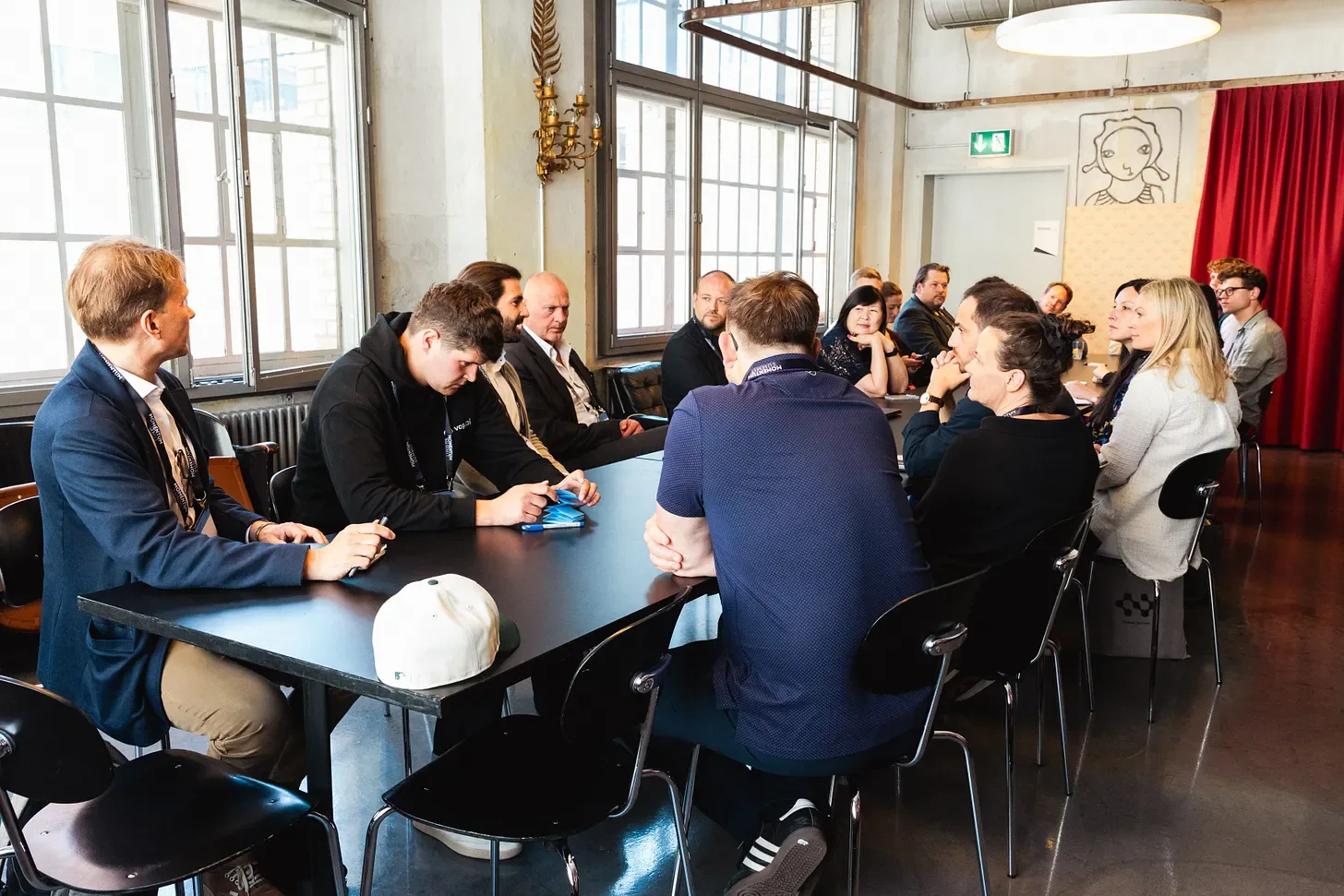
On the 8th of May 2026, a closed-door conversation in Zürich gathered investors, founders, and operators from across the circular materials and biotech space to work through a question that most of the sector's pitch decks and policy papers quietly avoid: if the technology is ready, and the regulatory pressure is real, why is European circular materials not scaling faster?
The conversation was hosted by Gemma Corrigan, Senior Advisor to Parley Future Materials, and it did not produce an optimism report. It produced a structural diagnosis. And it produced a counter-thesis to the way most European circular materials companies, and the policymakers supporting them, are framing the scaling problem.
The sector is treating a capital infrastructure problem as if it were a venture problem. It is not. The distinction matters because the solution to a venture problem is more risk-tolerant early-stage capital. The solution to an infrastructure problem is aggregate demand commitments, corporate equity positions, and instruments that do not yet exist in the European toolkit at the required scale.
This essay starts from that conversation, then builds outward. The diagnosis and the core argument are what the room produced. The supporting detail, the named companies, the figures, the policy context, comes from research conducted afterward to test and extend what was said. Where a claim is attributed to "a participant" or "the room," it reflects something said in the conversation. Everything else is verified independently.
It argues four things.
1). The time for pure sustainability business cases is over. The companies that will scale are those for whom the sustainability proposition and the economic proposition are the same thing.
2). The offtake agreement unlocks everything, but the sequence required to obtain one is structurally impossible for most companies without an instrument that does not currently exist.
3). Feedstock cost is not fixed. It is dynamic, and the moment your competitive advantage becomes visible, it starts to erode.
4). Europe is producing the technology and, in some cases, exporting the scaling opportunity.
The wrong unit of analysis
The conventional framing of the circular materials scaling problem is a venture capital framing. There are excellent companies at the pilot stage. They need growth capital to move from pilot to industrial production. The market is large. The regulatory tailwinds are strong. The investors who move early will capture disproportionate returns.
This framing produces a particular kind of investor activity. It produces seed rounds and Series A rounds and a growing number of European circular materials companies with proven technology at small scale. What it does not produce is the upstream infrastructure that industrial customers need to commit to buying at volume.
The conversation in May named the problem plainly. The circular transition at scale is not a technology problem and it is not primarily a venture capital problem. It is an infrastructure problem. The factories, the processing facilities, the feedstock collection and sorting networks, the logistics chains: all of the physical infrastructure required to deliver recycled or bio-based materials at the volumes that large industrial buyers need does not yet exist. And the instruments required to fund that infrastructure are either absent or inadequately capitalised in the European context.
Treating it as a venture problem produces a consistent failure mode. Companies raise enough capital to prove the technology at pilot scale. They approach large industrial customers. The customer is interested. The customer wants volumes that require a production facility ten to one hundred times larger than the current operation. The customer will not commit to a purchase contract without seeing the facility. The venture investor will not fund the facility without seeing the purchase contract. The company is stuck. The technology works. The loop is broken somewhere else.